
TL;DR
- Most beef calves are born February through April: 55.6 percent nationally in USDA’s Beef 2017 study. Ranches line up calving help from December to February.
- The core of the job is checks around the clock. SDSU Extension’s rule of thumb is every 3 hours, and Minnesota Extension says to step in when a cow in active labor makes no progress for 30 minutes, or a heifer for 60.
- Most births need no help: 90.6 percent of heifer calvings and 96.2 percent of cow calvings in USDA’s survey. The rest of the work is colostrum, warming cold calves, tagging and records.
- No survey publishes a calving-specific wage. The closest benchmarks: a $17.63 hourly median for ranch animal workers (BLS, May 2025) and $17.73 an hour for livestock workers in Idaho, Montana and Wyoming (USDA, January 2025).
- For the 2027 season, call ranches in December and January. The Montana Stockgrowers convention runs December 3 to 5, 2026, in Billings.
Calving is when a cow-calf ranch needs the most hands and gets the least sleep. Hiring rises into spring: USDA counted 144,000 hired ranch and farm animal workers in mid-January 2025 and 155,000 in early April.
It is seasonal work with a clear start date, which makes it a workable way onto a ranch. The year-round side of the job is in cowboy and ranch hand jobs.
When is calving season, and when do ranches hire for it?
Most herds calve from February through April, so ranches hire calving help from December to February. In USDA’s Beef 2017 study of 24 states, 55.6 percent of calves were born in those three months, and the West started earlier than the Plains.
| Month born | West (MT, WY, CO, ID, TX, OK, OR, CA) | Central (NE, SD, ND, KS, IA, MN, MO) | United States |
|---|---|---|---|
| January | 7.2% | 2.4% | 5.7% |
| February | 15.0% | 10.6% | 12.3% |
| March | 22.2% | 27.0% | 22.4% |
| April | 18.8% | 29.4% | 20.9% |
| May | 8.0% | 11.4% | 8.9% |
| October–December | 15.3% | 7.8% | 15.4% |
Source: USDA APHIS, NAHMS Beef 2017 Part I (published 2020), share of calves born alive in 2017 by month. Rows do not total 100 percent because June through September are left out.
Calving dates follow breeding. Gestation is 283 days, so a herd that starts calving in March had bulls turned out in late May. SDSU Extension benchmarks a 64-day breeding season, which means about two months of calving.
Many herds run longer. Only 45.6 percent of operations had all their calves born within 3 months or less: 41.2 percent in the West and 56.5 percent in the Central region. Ask how long the season runs before you commit.
Fall calving is a smaller second season, with 15.3 percent of Western calves born October through December. USDA estimates 23.9 million calves were born in the first half of 2026 and expects 8.6 million in the second, for a 32.5 million calf crop.
What does a calving hand actually do?
Mostly checks: going through the heifers and calving pasture every few hours, day and night. SDSU Extension veterinarian Russ Daly calls every 3 hours “a common rule of thumb,” with more checks for first-calf heifers or in cold, wet weather.
Big outfits check the most. Among operations that watched heifers on a schedule, 47.6 percent of those with 200 or more cows checked five or more times a day, against 13.7 percent of those under 50 cows (NAHMS). Those overnight rounds are the night calver’s job.
A typical calving shift includes:
- Heifer checks. First-calf heifers need help more often than cows, so they get the closest watch.
- Bringing in a cow that needs help. MSU Extension recommends a self-catch head gate, which lets one person restrain her.
- Assisting a birth, or calling the person who will. The timing rules are in the next section.
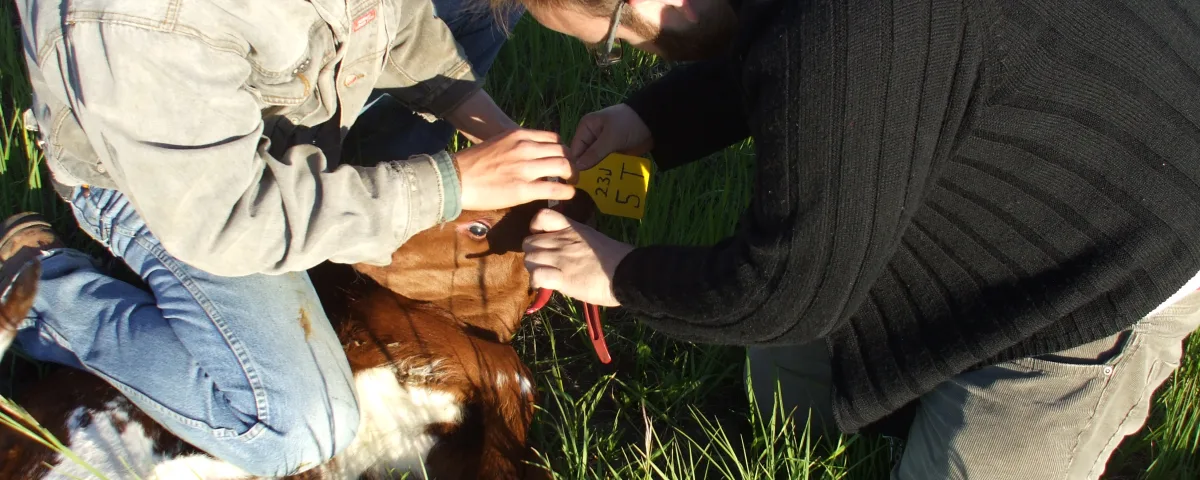
- Newborn care. Clearing the nose, making sure the calf nurses, giving colostrum by bottle or tube, and warming chilled calves.
- Tagging and records. Calf ID, dam, date, sex and any help given.
- Chores. Feeding, bedding and cleaning pens after each pair moves out.
Some ranches feed late in the day to push births into daylight. In an Iowa State trial cited by SDSU Extension, cows fed at 4 p.m. had 82 percent of calves between 6 a.m. and 10 p.m. A USDA study in Montana found a smaller 10 to 20 percent drop in night calving.
How long should you wait before helping a cow or heifer calve?
About 30 minutes without progress for a cow and 60 minutes for a heifer once she is in active labor (stage 2), by University of Minnesota Extension’s rule. Other extension services word it differently, so learn the ranch’s own rule on day one.
| Stage | What you see | Normal length | Get help when |
|---|---|---|---|
| 1: Dilation | Restless, pacing, up and down, tail held out, leaving the herd | 2 to 6 hours, longer in heifers (USDA) | No move to stage 2 after 6 hours (Minnesota) or 8 hours (K-State, SDSU) |
| 2: Delivery | Water bag appears, strong straining, feet show | Cows within 30 minutes and heifers within 1 hour of the water bag (USDA); up to 2 hours for cows and 3 for heifers (MSU) | No progress for 30 minutes; water bag out 2 hours with no straining; she quits for 15 to 20 minutes after progress; anything other than two front feet and a head (K-State) |
| 3: Afterbirth | Placenta passes | 1 to 8 hours (USDA); usually within 12 hours (MSU) | Not passed in 12 hours: call the vet and do not pull it (MSU) |
Sources: Minnesota, MSU, K-State and SDSU Extension; USDA NAHMS Beef 2017. A normal calf comes front feet first, soles down, head resting on the legs.
MSU Extension lists the cases that need a veterinarian right away:
- The calf is too big: one gloved hand cannot move around it in the birth canal.
- A heifer’s cervix will not open after 5 to 10 minutes of massage.
- The whole uterus comes out after birth (a uterine prolapse).
- The placenta has not passed 12 hours after calving.
Backward calves, hind feet first with soles up, need speed, because the umbilical cord can pinch in the pelvis. K-State adds a swollen tongue or heavy bleeding as signs to act.
Most nights are quieter than this list. In USDA’s survey, heifers needed an easy pull 6.2 percent of the time and a hard pull 3.0 percent; cows, 3.2 and 0.6 percent.
What do you do once the calf is on the ground?
Get it breathing, get colostrum into it within about 2 hours, keep it warm, then tag it and write it down. MSU Extension says to clear mucus from the nose and tickle the nostril with straw to make the calf sneeze if the cow does not start licking it.
Colostrum. K-State says calves should have colostrum within the first 2 hours. If the calf cannot get it from the cow, give it within 4 to 6 hours. MSU says a calf should nurse within 2 to 4 hours, because newborns get their first disease protection only from that milk.
Cold calves. A newborn’s normal rectal temperature is 101.5 to 102.5°F, and Nebraska Extension says to act once it drops below 101. Colostrum comes first. Then use a warming hut, warm forced air such as a truck floorboard, or a warm water bath.
Never leave a calf alone with a heat source, and dry a bathed calf completely before it goes back out. Weather was the main cause of death in calves under 3 weeks old on 25.6 percent of operations in a 2007 USDA study, Nebraska Extension notes.
Records. SDSU Extension’s sample calving record includes birth date, birth weight, calf ID, sex, calving ease score and coat color. It says three traits recorded for every calf beat ten recorded for half the crop. Nebraska Extension adds: record what colostrum each calf got, and how much.
Tagging safely. A fresh cow can fight to protect a calf she knows cannot run, warned Rob Eirich, then Nebraska’s Beef Quality Assurance director at UNL. Approach from the side rather than head-on, use good lighting at night, and watch for ice in alleys.
What skills and gear get you hired for calving?
Ranches want three things from calving help: you handle cattle quietly, you can work nights in cold weather, and you call for help early instead of late. Specific skills that help an application:
- Knowing the stages of labor and a normal presentation.
- Placing OB chains: MSU describes a loop above the fetlock and a half hitch below it.
- Tube-feeding colostrum and taking a calf’s temperature.
- Tagging, and keeping a clean calving book.
- Running a feed truck or tractor, and riding if the ranch checks pastures horseback.
What a beginner can do. Because more than 90 percent of births need no help, a careful beginner can run checks, keep records, feed, bed and warm calves while an experienced hand handles the pulls. Be honest about which of those you have done.
Nebraska Extension’s Calving College lets you practice first. In 2026 it ran three webinars from January 19 to February 2 and hands-on workshops with a life-sized cow and calf model in four Nebraska and South Dakota towns, for $80. 2027 dates were not posted as of Oct 26, 2026.
The other routes in, from internships to guest ranches, are in how to get a ranch job with no experience.
Gear. The ranch supplies the calving kit. MSU’s list includes OB chains and handles, a calf puller, shoulder-length gloves, lubricant, disinfectant, colostrum, an esophageal feeder, a thermometer and a suction bulb. You bring insulated coveralls, a headlamp with spare batteries, warm gloves and boots with grip on ice.
What does calving work pay?
No federal or state survey reports a calving-specific wage, so use general livestock worker pay: a $17.63 national median in May 2025 (BLS) and $18.15 an hour in USDA’s January 2025 count. These figures cover ranch animal workers overall, not calving hands alone.
| Hourly benchmark | Montana | Wyoming | South Dakota | Nebraska | United States |
|---|---|---|---|---|---|
| BLS median, ranch animal workers, May 2025 | $17.79 | $18.71 | $18.27 | $17.90 | $17.63 |
| BLS 10th–90th percentile, May 2025 | $14.72–$26.89 | $10.84–$22.96 | $15.51–$24.65 | $17.89–$23.10 | $13.15–$26.00 |
| USDA livestock workers, Jan 12–18, 2025 | $17.73 | $17.73 | $18.77 | $18.77 | $18.15 |
| USDA livestock workers, Apr 6–12, 2025 | $17.13 | $17.13 | $18.72 | $18.72 | $18.15 |
| H-2A wage floor 2026–2027, Skill Level I / II | $13.46 / $18.62 | $12.16 / $17.59 | $13.19 / $17.92 | $16.25 / $20.56 | Set by state |
Sources: BLS OEWS occupation 45-2093 via O*NET; USDA NASS Farm Labor, May 21, 2025, by region (Idaho-Montana-Wyoming; Northern Plains); DOL 2026–2027 AEWRs for U.S. workers, field and livestock.
USDA’s January figure is the closest to calving season, and there will not be a newer one: NASS discontinued its Agricultural Labor Survey on August 28, 2025. Its wages can include in-kind pay such as a side of beef, but leave out housing and meals.
Hourly, daily or monthly. Federal data is hourly, while ranch offers come many ways. To compare, convert an offer to dollars per hour of expected work. At USDA’s $17.73 January rate and the 42.0 hours hired workers in the region averaged that week, a month comes to about $3,230.
Overtime. Farmworkers are exempt from federal overtime. Workers on a ranch that used no more than 500 man-days of farm labor in every quarter of the prior year are exempt from minimum wage too (29 U.S.C. 213). Ranch hand pay covers the details.
Housing and meals. Night checks are easier from a bunk on the place, so ask what housing comes with the job. IRS Publication 15-B (2026) treats lodging as tax-free when it is on the business premises, for the employer’s convenience and a condition of employment. Ask whether meals are included.
H-2A. The visa program covers farm work “tied to a certain time of year” (20 CFR 655.103). A federal court found DOL’s wage method unlawful on August 26, 2026, but current rates stay in effect until new ones are published. Ranches see the same floors in how to hire ranch hands.
How do you find a calving job for the 2027 season?
Call and visit ranches from December through January, ahead of February and March, when many producers begin calving (UNMC’s agricultural safety center). Most of the effort is building a list of ranches and getting in front of the people who run them.
| When | What to do |
|---|---|
| Now to November 2026 | Build a list of cow-calf ranches. The Montana Stockgrowers Association’s 2026 Cattle Directory lists ranches by name, town and phone. Ask your county extension office and local large-animal vet who calves heifers. |
| December 3–5, 2026 | Montana Stockgrowers Annual Convention and Trade Show, DoubleTree and Northern hotels, Billings. A Thursday pass is $50; the full pass is $300 for non-members at the early rate. |
| December 2026 to January 2027 | Call ranches. Give your start date, say you will work nights, list what you have done, and say whether you have a vehicle. |
| January to February 2027 | Western herds that calve early are already going: 31.9 percent of Western operations had calves born in January (NAHMS). Take a calving school if one is offered. |
| Summer 2027 | Contact fall-calving herds before their calves start coming in the fall. |
State job services list farm work too. In Montana, MontanaWorks, run by the Department of Labor and Industry, connects you with local Job Service offices. For other states, see ranch jobs by state.
Put your dates and skills where ranchers can find them with a Job Wanted post, and check open ranch hand jobs, cowboy jobs and ranch hand jobs in Montana.
Frequently asked questions
What is a night calver?
A hand hired to check calving cows and heifers overnight, usually every few hours; SDSU Extension’s rule of thumb is every 3. The night calver assists easy births, calls the boss or vet for hard ones, and gets newborns dry, fed and recorded.
How long does a calving job last?
As long as the ranch’s calving season, plus setup and cleanup. SDSU Extension benchmarks a 64-day breeding season, which gives about two months of calving, but 54.4 percent of operations in USDA’s survey had calves born over more than 3 months.
Can I get a calving job with no experience?
Sometimes, if you are honest about it and the ranch has an experienced hand for pulls. Over 90 percent of births need no help, so checks, records, feeding and warming calves are real work. A calving school with a life-sized model, like Nebraska Extension’s, helps.
When should I apply for calving jobs in Montana?
December and early January for spring herds. In USDA’s survey, 31.9 percent of operations in the West region, which includes Montana, had calves born in January and 48.6 percent in February. The Montana Stockgrowers convention, December 3 to 5, 2026, in Billings, is a good place to meet ranchers.
Do calving jobs include housing?
Ask before you agree, since checks run through the night. USDA notes that housing and meals go to some farm workers and are not counted in its wages. Lodging on the ranch, for its convenience and required for the job, is not taxable under IRS Publication 15-B.
Sources
- USDA APHIS, National Animal Health Monitoring System, Beef 2017, “Beef Cow-calf Management Practices in the United States, 2017,” Part I (2020), tables B.2.a–f and C.4.a–f, accessed Oct 26, 2026.
- USDA National Agricultural Statistics Service, Cattle report news release, July 24, 2026; NDSU Extension, Tim Petry, summary of the July 2026 Cattle report, accessed Oct 26, 2026.
- SDSU Extension: Russ Daly, “How Often Should You Check Cows During Calving Season?” (Feb 5, 2021); Taylor Grussing, “Preparing for the Calving Season” (Dec 11, 2025); Adele Harty, “Feed at Night, Calve During the Day” (Sep 9, 2022); “Calving Records 101” (Apr 16, 2024); “Defining Breeding Season” (Jan 9, 2023), accessed Oct 26, 2026.
- Montana State University Extension, Rebekah Clark, Hannah DelCurto-Wyffels and Megan Van Emon, MontGuide MT202405AG, “Preparing for Calving Season” (Aug 2024), accessed Oct 26, 2026.
- University of Minnesota Extension, Joe Armstrong, DVM, “When to help a cow or heifer that is calving” (reviewed 2026), accessed Oct 26, 2026.
- Kansas State University, Sandy Johnson and AJ Tarpoff, DVM, “Preparing for the calving season,” Beef Tips, Jan 3, 2022, accessed Oct 26, 2026.
- Nebraska Extension: Lindsay Waechter-Mead, DVM, “Managing Hypothermia in Newborn Calves,” BeefWatch, Feb 1, 2023; “Nebraska Extension to offer 2026 Calving College webinar series and hands-on workshops,” IANR News, Jan 8, 2026, accessed Oct 26, 2026.
- Central States Center for Agricultural Safety and Health, University of Nebraska Medical Center, “Managing Mama Cows” (press release quoting Rob Eirich, Nebraska Extension), March 2016, accessed Oct 26, 2026.
- U.S. Bureau of Labor Statistics, Occupational Employment and Wage Statistics, May 2025, occupation 45-2093, via O*NET OnLine state wage pages for Montana, Wyoming, South Dakota and Nebraska, accessed Oct 26, 2026.
- USDA National Agricultural Statistics Service, Farm Labor, May 21, 2025; NASS notice “NASS discontinues select data collection programs and reports,” Aug 28, 2025, accessed Oct 26, 2026.
- U.S. Department of Labor, Office of Foreign Labor Certification, H-2A Adverse Effect Wage Rates, 2026–2027 statewide AEWR file and announcement of Sep 2, 2026; 20 CFR 655.103, accessed Oct 26, 2026.
- 29 U.S.C. 213, Fair Labor Standards Act exemptions, Legal Information Institute; Internal Revenue Service, Publication 15-B (2026), accessed Oct 26, 2026.
- Montana Stockgrowers Association, 2026 Annual Convention and Trade Show and Cattle Directory; Montana Department of Labor and Industry, MontanaWorks, accessed Oct 26, 2026.