
TL;DR
- Livestock workers averaged $18.15 per hour nationally in April 2025, and the median ranch and livestock farmworker earns $17.63 per hour or $36,670 a year. That number excludes housing, which most ranch jobs include.
- Posted ranch hand packages in Wyoming and North Dakota in 2026 ran $35,000 to $55,000 plus a house with paid utilities, beef, and sometimes health coverage and a truck.
- Most listings ask for 2 to 5 years of experience. The way in without it is seasonal haying and irrigation, guest ranch wrangling, or day work at branding and shipping.
- Beef ranches cannot use the H-2A visa program for year-round work, so these jobs are filled by domestic hires. Many ranches hire couples.
Ranch work is one of the few outdoor careers with year-round jobs, housing, and a clear ladder from hand to foreman to manager. It is also one where employers are blunt about experience. This article separates the jobs that take beginners from the ones that do not, lays out what the pay actually is once housing is counted, and walks through the ranch calendar so you know when to apply.
What is the difference between a cowboy and a ranch hand?
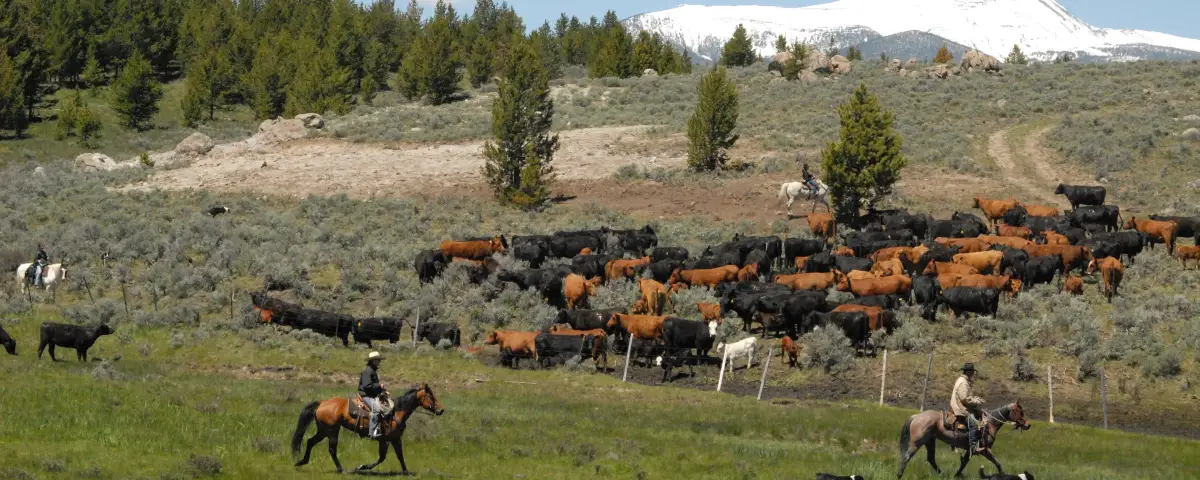
A ranch hand does everything the place needs: livestock, fence, machinery, irrigation, haying, buildings and water. A cowboy job is the horseback part of that work, gathering, sorting, branding, doctoring and moving cattle, and employers expect you to already be a hand with a horse and a rope. The titles overlap on many ranches. The practical difference is that ranch hand listings sometimes take beginners and cowboy listings almost never do.
Day work is the freelance version. Day-working cowboys bring their own horses, dogs and tack to brandings, gatherings and shippings, and get hired by reputation. Florida day workers earn about $200 per day, up from $65 in 1987 (Western Life Today, June 25, 2025). Feedlots pay hourly; ranches pay by the day.
Can I get a ranch job with no experience?
Yes, on the right kind of job. Of seven ranch hand and wrangler listings we reviewed on the largest ranch job board in September 2026, six required two to five years of experience, and the one that listed zero to two years still wanted demonstrated calving, fencing, haying and equipment skills (RanchWork.com listings, accessed Sep 12, 2026). Cow-calf positions are not where a beginner starts.
Three doors are open. Seasonal summer help for haying, irrigating and fencing, where a driver’s license and willingness to run a swather matter more than a résumé. Guest ranch wrangling, which pays less but teaches riding, horse care and trail work in a season, and is listed under dude ranch jobs. And day work at spring brandings and fall shippings, where you show up with a horse and prove yourself in a day. One or two seasons of any of these turns you into the “some experience” hire that most ranches want.
Formal training exists but is aimed at management. The TCU Ranch Management certificate in Fort Worth is a nine-month, 35-credit program that itself requires basic ranch experience before admission (Texas Christian University, accessed Sep 12, 2026). Texas Tech’s two-year Master of Science in Ranch Management includes two six-month paid ranch internships at $1,000 a month with housing, and covers tuition with scholarships (Texas Tech University, accessed Sep 12, 2026). Neither is the way to a first hand job; both are the way to a manager job later.
What does a ranch year look like?
| Month | Work (March-calving herd, Northern Plains and Rockies) | Hiring activity |
|---|---|---|
| January–February | Feeding, prepping calving facilities, checking hay quality | Ranches hire calving help; apply now |
| March–May | Calving; move cows to calving pasture ten days before due | Busiest, hardest weeks of the year |
| May | Process calves, turn bulls in (May 23 on the UNL calendar), branding | Day work at brandings; summer crews start |
| June–August | Irrigating, haying, fence; bulls pulled late July | Seasonal hourly hands hired April–May |
| September–October | Preg-check, body-condition score, select replacements, gather | Fall day work |
| November | Weaning and shipping calves | Shipping crews; full-time openings post for winter |
| December | Feeding, equipment, planning | Quiet |
Calendar adapted from the University of Nebraska–Lincoln Beef Production Calendar for a March-calving herd, accessed Sep 12, 2026. Southeastern ranches calve January through March and wean September through October (Mississippi State University Extension, Pub. P2613). Weaning is timed around 205 days of age, the standard reference point for calf weights (Mississippi State Extension, Pub. P2501).
How much do ranch hands and cowboys make?
Start with the government numbers, then add the package. USDA’s Farm Labor Survey put livestock workers at $18.15 per hour nationally in April 2025, with $17.13 in Idaho, Montana and Wyoming, $16.90 in Colorado, Nevada and Utah, $18.72 in the Northern Plains and $16.33 in Texas and Oklahoma (USDA NASS, May 21, 2025). Those rates are gross wages only. NASS states that housing and meals “are provided to some workers but the values are not included.”
| State | Median hourly | Median annual | 10th–90th percentile hourly |
|---|---|---|---|
| Colorado | $19.10 | $39,740 | $15.44–$27.48 |
| Wyoming | $18.71 | $38,920 | $10.84–$22.96 |
| Nebraska | $17.90 | $37,220 | $17.89–$23.10 |
| Montana | $17.79 | $37,010 | $14.72–$26.89 |
| Texas | $16.31 | $33,920 | $11.59–$24.27 |
| United States | $17.63 | $36,670 | $13.15–$26.00 |
Bureau of Labor Statistics Occupational Employment and Wage Statistics, May 2025 data, occupation 45-2093 Farmworkers, Farm, Ranch and Aquacultural Animals, as published by O*NET OnLine, accessed Sep 12, 2026.
Real listings show what the package adds. A Sheridan, Wyoming ranch posted in September 2026 offered $35,000 to $45,000 depending on experience, a house with paid utilities, a $250 monthly food allowance, half a beef every June, healthcare reimbursement and a retirement contribution after three years. A western North Dakota ranch posted in February 2026 offered $55,000 or more with single or family housing, health insurance, a pickup and a phone. A Douglas, Wyoming family ranch offered negotiable pay with housing, utilities, internet and beef (RanchWork.com listings, accessed Sep 12, 2026). Hired farm and ranch wages overall average about 60 percent of nonfarm production wages, $18.12 against $30.13 in 2024, which is why the housing matters (USDA Economic Research Service, updated Nov 18, 2025).
Is ranch housing taxed as income?
Usually not, if the ranch does it right. IRS Publication 15-B lets an employer exclude lodging from your wages when it is on the business premises, furnished for the employer’s convenience, and required as a condition of employment, for example when you must be on the place to check calving cows at night (IRS Publication 15-B, 2026). Meals on the premises for the employer’s convenience are excluded on the same basis. Two catches: if you are offered cash instead of the house and choose the house, the exclusion is lost, and a cash housing allowance is always taxable (IRS Publication 15-B, 2026).
Beef and other commodity wages are different. Noncash wages paid to farmworkers, including farm products, are not subject to Social Security or Medicare tax or federal withholding, but they are reported on your W-2 and subject to income tax unless an exclusion applies (IRS Publication 15, 2026). Ask the ranch how it reports the beef.
Why don’t ranches use visa workers for these jobs?
Because they mostly cannot. The H-2A program is for seasonal work of ten months or less, and USDA’s Economic Research Service notes that most livestock producers “are not legally allowed to use the program to meet year-round labor needs,” with the exception of range sheep and goat herding (USDA ERS, updated Nov 18, 2025). In a survey of 535 cattle and dairy producers published in 2025, only 40 employed H-2A workers (Choices Magazine, 2025). Year-round cow-calf jobs are filled by people who answer ads, call around, and show up at brandings. That is good news for domestic applicants. H-2A range herders are paid a monthly rate of $2,132.41 as of February 2026 with housing and meals provided (U.S. Department of Labor, accessed Sep 12, 2026), which is a useful floor when you evaluate a domestic offer.
Do ranches hire couples?
Often. A 6,000-acre ranch near Dallas advertised a management couple at $40,000 to $60,000 a year with a new double-wide and all bills paid, splitting outdoor property work and guest cooking and cleaning (FarmJobSearch.com, accessed Sep 12, 2026). A Florida ranch posted in September 2026 asked for “an individual or couple looking for a stable, long-term arrangement” with a private on-site apartment. North Dakota and Wyoming listings offer “single or family housing.” Listings that welcome couples say so in the description; start with jobs with housing.
What should I put in a ranch job application?
- What you can run: swather, baler, loader tractor, feed truck, skid steer, wheel lines. Name the models if you can.
- Stock skills, honestly ranked: calving, doctoring, riding, roping, shoeing. Say which you have not done.
- A driver’s license, and a CDL if you have one. Many listings ask for one for hauling hay and cattle.
- Two references from people who have watched you work, with phone numbers.
- Your situation up front: partner, kids, dogs, horses, housing needs. Ranches plan around households.
- Availability dates and whether you want year-round or seasonal. See how to write a Job Wanted post for the format.
Where are ranch jobs right now?
Open listings are at ranch hand jobs and cowboy jobs, with the deepest markets in Montana, Wyoming, Texas and Nevada. Guest ranch wrangler positions are under dude ranch jobs.
Frequently asked questions
Do I need my own horse for a ranch job?
Not for a full-time ranch hand job; most ranches keep a string. Day-working cowboys are expected to bring two to six horses of their own, plus tack, dogs and ropes. Some ranches pay more or provide feed if you bring reliable horses.
Are ranch jobs year-round?
Cow-calf positions are year-round and follow the calving, haying and shipping calendar. Seasonal hourly jobs for haying and irrigation run roughly May through October. Winter is feeding and calving, which is when ranches most often need help.
What is a day-work cowboy?
A freelance cowboy hired by the day for brandings, gatherings, doctoring and shipping, bringing their own horses and gear. Day rates around $200 are documented in Florida; Texas day workers report similar rates. Work comes by reputation, so it is a good way to build references.
How many hours does a ranch hand work?
Long ones in season. A university survey of full-time employees on large farms found about 50 hours a week on average, from 43 in December through March to 58 in September through November. Ranches follow the same shape with calving as the second peak.
Sources
- USDA National Agricultural Statistics Service, Farm Labor, May 21, 2025 (January and April 2025 reference weeks), accessed Sep 13, 2026.
- U.S. Bureau of Labor Statistics, Occupational Employment and Wage Statistics, May 2025, occupation 45-2093, via O*NET OnLine state wage pages for Colorado, Wyoming, Nebraska, Montana and Texas, accessed Sep 13, 2026.
- USDA Economic Research Service, “Farm Labor”, updated Nov 18, 2025, accessed Sep 13, 2026.
- University of Nebraska–Lincoln Beef, “Beef Production Calendar”, accessed Sep 13, 2026.
- Mississippi State University Extension, Publication P2613, Mississippi Beef Cattle Management Calendar and Publication P2501, Calving Season Selection Considerations, accessed Sep 13, 2026.
- Western Life Today, “Modern Day Freelance Cowboys”, June 25, 2025, accessed Sep 13, 2026.
- Texas Christian University Ranch Management certificate program and FAQ; Texas Tech University M.S. in Ranch Management, accessed Sep 13, 2026.
- IRS Publication 15-B (2026), Employer’s Tax Guide to Fringe Benefits, and Publication 15 (2026), Employer’s Tax Guide, accessed Sep 13, 2026.
- U.S. Department of Labor, Office of Foreign Labor Certification, H-2A Adverse Effect Wage Rates, and 20 CFR 655.210, range occupation job offer requirements, accessed Sep 13, 2026.
- Gutiérrez-Li, Neupane and Escalante, “Where Are the Workers? A Look at the Labor Needs of Livestock Farmers,” Choices Magazine, 2025, accessed Sep 13, 2026.
- Iowa State University Extension, Ag Decision Maker C1-60, Wages and Benefits for Farm Employees, accessed Sep 13, 2026.
- RanchWork.com listings for Sheridan WY, Gladstone ND, Douglas WY, Red Owl SD, Wheatland WY and Dunnellon FL; FarmJobSearch.com ranch couple listing; cited as examples of package structure, accessed Sep 13, 2026.