
TL;DR
- A pen rider rides every assigned pen on a feedyard each day, pulls sick or hurt cattle to the hospital pen and helps receive and ship. Respiratory disease is the main target: 16.2 percent of cattle placed in large feedlots showed signs of it in USDA’s Feedlot 2011 study.
- Most big feeders want you to bring a gentle horse and your own tack. Cactus Feeders and Five Rivers Cattle Feeding both require it, and Cactus’s Frontier Feedyard pays a monthly horse stipend.
- Cactus Feeders posted $15.16 to $20 an hour for pen riders at its Burlington, Colorado, yard (open Oct 26, 2026). The closest federal benchmark, BLS occupation 45-2093, had a $17.63 hourly median in May 2025.
- It is year-round work. U.S. feedyards of 1,000 head or more held 11.45 million cattle on January 1, 2026, and 11.37 million on October 1. Expect rotating weekends and every kind of weather.
- Nebraska, Texas and Kansas held 7.45 million of those 11.37 million cattle on October 1, 2026, about 65 percent, so that is where most pen rider jobs are.
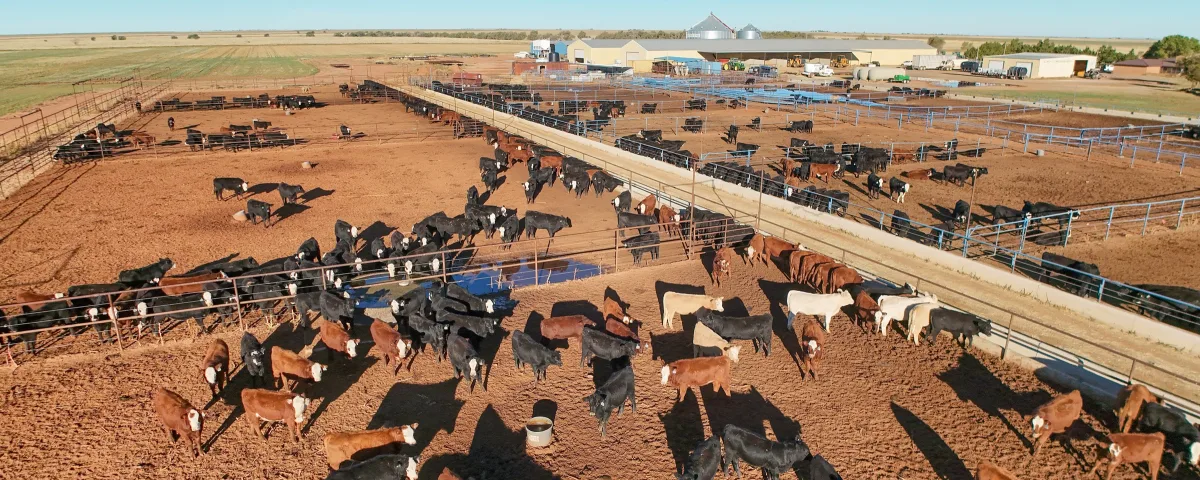
A feedyard is the one place a horseback cowboy can ride every day of the year for an hourly wage with health insurance. The cattle come to you: calves and yearlings off ranches, fed for months on a ration, then shipped to the packer.
The riding is different from ranch work. You read cattle for sickness in pens, not on pasture, and the job runs on veterinary protocols and records. This guide covers the daily work, the horses, the pay and where the yards are.
What does a pen rider do all day?
A pen rider rides through every assigned pen each day, picks out cattle that look sick or hurt, and drives them to the nearest hospital pen. Five Rivers, Cactus Feeders and Friona Industries all describe the job that way.
Friona describes the pen rider as its first line of detection for cattle health. The rest of the day fills in around the pen checks. From the three companies’ postings:
- Riding pens. Watch every animal for signs of distress. Friona also has riders check the water system each time they enter a pen.
- Pulling and returning. Drive sick cattle to the hospital pen, then bring treated cattle and strays back to their home pens.
- Deads and problem cattle. Call in dead cattle for removal, and record stiff or prolapsed cattle.
- Receiving. Weigh, unload and count new cattle and assign them to pens (Cactus, Frontier Feedyard).
- Shipping. Open gates, drive fat cattle to the scale, count them, sort off strays and check drug withdrawals (Five Rivers).
- Reporting. Flag broken water tanks, bunks and holes, and tell the boss about pens that are trending wrong.
- Barn chores. Clean stalls, care for horses and tack, and keep the break room swept.
Some yards fold doctoring into the job. Cactus’s Burlington pen riders give medications under veterinary protocols and keep records, and Friona’s Dalhart posting says doctoring duties will be assigned too.
If you have only worked cow-calf outfits, the rhythm is the big change. A ranch year turns on calving, branding and shipping, covered in cowboy and ranch hand jobs. A feedyard runs the same routine every day.
How do pen riders spot sick cattle?
By behavior first. Purdue Extension says subtle depression, lagging behind the group, and changes in eating or social behavior are often the first signs of bovine respiratory disease (BRD), with coughing and discharge coming later.
BRD, also called shipping fever, is the main reason the job exists. In USDA’s NAHMS Feedlot 2011 study, 16.2 percent of cattle placed in large feedlots showed signs of it during the feeding period, and 87.5 percent of those were treated.
| When | What to look for | Who checks |
|---|---|---|
| Early | Dull or depressed, lagging behind the pen, eating less or skipping the bunk, keeping apart from the others | Pen rider, horseback |
| Later | Nasal or eye discharge, harder or faster breathing, coughing, droopy ears or head tilt, arched back, gaunt flanks | Pen rider, horseback |
| At the chute | Rectal temperature (normal is 101 to 102°F; BRD cases usually run above 104°F) and crackles or wheezes in the lungs | Doctor crew or veterinarian |
Source: Purdue Extension, Bovine Respiratory Disease Complex (VA-33-W), January 2021. Purdue adds that cattle are prey animals and hide early signs, which is why trained riders matter.
Calm handling helps you see it. Nebraska Extension notes that cattle used to people are less likely to mask pain or disease, and that a handler’s presence alone stresses cattle that are not.
What gets pulled is set by the yard’s veterinarian, not by you. Friona asks pen riders to understand the consulting vet’s pull requirements, and the Beef Quality Assurance (BQA) Feedyard Assessment checks for a written disease identification protocol for pen riders and for pen check and pull records.
Treatment follows protocol too. K-State researchers who ran three feedlot BRD treatment trials concluded that no one treatment is best, and that choices belong with a veterinarian who knows the cattle.
Every pull ends up on paper. Purdue recommends a treatment card for each case with animal ID, age, date, clinical signs, and the antibiotic and route. Friona’s cattle doctors also log pen and ear tag numbers, and BQA guidelines say to keep treatment records at least two years.
What skills and horses do feedyards want?
A safe rider with a gentle horse and your own tack is the first requirement on most big-feeder postings. After that, yards want cattle sense, basic math and someone who shows up.
| Yard | Horse | Other requirements |
|---|---|---|
| Cactus Feeders, Frontier Feedyard, Spearman, Texas | Provide and maintain your own horse and tack; monthly horse stipend (amount not listed) | Cow-calf, stocker or feeding experience preferred; diploma or GED preferred, not required |
| Cactus Feeders, Burlington Feeders, Colorado | Maintain personal horses | Low-stress handling knowledge highly preferred; valid driver’s license; lift up to 50 pounds |
| Five Rivers, XIT Feeders, Dalhart, Texas | Furnish a gentle horse and tack | Two-digit math and working with weights; knowledge of cattle breeds; ride daily |
| Friona Industries, Dalhart, Texas, and Satanta, Kansas | Not stated; you care for horses and tack | Know the vet’s pull rules; the Satanta application requires age 18 and a driver’s license |
Source: company careers pages, accessed Oct 26, 2026.
The horse. Kevin Dwyer, manager of Sellers Feedyard in Lyons, Kansas, told the University of Nebraska Medical Center’s Central States Center for Agricultural Safety and Health (CS-CASH) that good feedyard horses are durable, large-boned and big-footed. You seldom see one under four years old.
They must handle gates, cut one animal out of a pen, push cattle down an alley and stand quietly through semi trucks and backup alarms. Pen riders at Sellers often keep three or four horses and rotate them through the year.
Stockmanship over speed. Dwyer bans loping and galloping in alleys and pens and says speed is a common factor in 99 percent of feedyard mishaps. Rodeo or branding-pen habits do not carry over. In his words, “I’ll take a good stockman over a cowboy every time.”
BQA certification. Cactus lists it as a plus for its doctoring and processing crews. BQA offers a Feedyard course online (about 2 to 3 hours) or in-person training (2 to 4 hours). Its feedyard assessment sets a goal of prod use on 10 percent of cattle or fewer.
If you are newer to cattle, how to get a ranch job with no experience covers the basic skills and training programs.
How much do pen riders make?
About $15 to $20 an hour at the one big feeder here that publishes a range: Cactus Feeders posted $15.16 to $20 an hour for pen riders at Burlington Feeders in Colorado, open on Oct 26, 2026.
Burlington’s doctoring crew and feed truck drivers post the same range. Cactus’s Frontier Feedyard pays hourly by experience plus a monthly horse stipend. Five Rivers and Friona do not post pay.
The closest federal figure is BLS occupation 45-2093, farmworkers who tend farm, ranch and aquacultural animals. Its national median was $17.63 an hour ($36,670 a year) in May 2025, with a mean of $18.88.
| State | Median hourly | Median annual | 10th to 90th percentile hourly | Workers counted |
|---|---|---|---|---|
| Colorado | $19.10 | $39,740 | $15.44 to $27.48 | 1,270 |
| Nebraska | $17.90 | $37,220 | $17.89 to $23.10 | 570 |
| Kansas | $17.82 | $37,060 | $14.01 to $22.88 | 1,340 |
| Texas | $16.31 | $33,920 | $11.59 to $24.27 | 3,750 |
| Oklahoma | $16.19 | $33,670 | $9.89 to $27.88 | 420 |
| United States | $17.63 | $36,670 | $13.15 to $26.00 | 32,810 |
Source: BLS Occupational Employment and Wage Statistics, May 2025, occupation 45-2093, via the BLS Public Data API, accessed Oct 26, 2026.
Treat it as a benchmark. BLS says the survey “excludes the majority of the agricultural sector,” keeping support activities for crop and animal production, so most feedyard payrolls are not in it. For a full breakdown of ranch pay, see how much ranch hands make.
Benefits. Cactus lists health, dental and vision insurance, life insurance, a 100 percent company-paid retirement through its employee stock ownership plan, a 401(k) at Burlington, and continuing education scholarships. Friona promises insurance coverage and performance-based incentive programs.
Overtime. Five Rivers lists the job as “Hourly, Ag Exempt.” Federal law, 29 U.S.C. 213(b)(12), exempts workers employed in agriculture from overtime pay, though state law can add protections. Ask how many hours a week the yard expects.
Housing. None of the feedyard postings cited here mention housing. Ask directly, and get the answer in your offer.
Is pen riding year-round, and what is the schedule?
Yes. U.S. yards with 1,000 head or more of capacity held 11.45 million cattle on January 1, 2026, and 11.37 million on October 1, 2026, and those cattle need checking every day.
That steady inventory is the draw. There is no layoff after shipping season, which is the main thing a feedyard offers a ranch cowboy tired of seasonal work like calving jobs.
- Weekends. Cactus’s Burlington pen riders work rotational weekends. Friona’s applications ask whether you can work weekends, evenings and changed shifts.
- Long days. Five Rivers wants flexibility to work varied hours when shipping requires it.
- Weather. Friona lists rain, sleet, snow, hail, heat, cold, wind and dust. Cactus says all weather, and Five Rivers adds airborne particles and usually loud noise.
It is also hard on the body. In a NIOSH-funded CS-CASH study of 243 feedyard workers in Kansas and Nebraska, interviewed from 2017 to 2020, 71.2 percent had been injured at least once on a feedyard.
Animals were the leading cause, at 33 percent of injuries, and legs, knees and hips the most-hurt body parts. That is the case for a calm horse and a flat-footed walk.
How does a pen rider compare with a ranch cowboy and other feedyard jobs?
A pen rider is the yard’s horseback health checker. The other crews feed, doctor, process or run the cattle side, and most do it on foot or in a truck.
| Role | Main work | On horseback? | Published pay |
|---|---|---|---|
| Pen rider | Daily pen checks, pulling sick cattle, receiving and shipping | Every day, usually your own horse | $15.16 to $20 an hour (Cactus, Burlington) |
| Doctoring crew or cattle doctor | Diagnosing and treating pulled cattle under vet protocols, health records | Some pen checks | $15.16 to $20 an hour (Cactus, Burlington); Friona wants 1 year on a doctoring crew |
| Cattle processor | Vaccinating, tagging, deworming and implanting new cattle at the chute | No | Hourly, not listed (Cactus, Frontier) |
| Feed truck driver | Delivering rations to the bunks on schedule | No | $15.16 to $20 an hour (Cactus, Burlington), mostly Monday to Friday |
| Cattle foreman or head cowboy | Running processing or the cattle crew, training and supervising | A plus | Salaried, not listed (Cactus, Ulysses); BLS farm supervisor median $28.52 an hour |
| Ranch cowboy | Cow-calf herds on pasture and range, plus fencing, haying and equipment | Often, varies by season | BLS 45-2093 median $17.63 an hour |
Sources: Cactus Feeders and Friona Industries postings, accessed Oct 26, 2026; BLS OEWS May 2025, occupations 45-1011 and 45-2093.
The feedyard has a ladder. Five Rivers’ pen riders report to a cattle manager or head cowboy, and Cactus’s cattle foreman job sits in a trainee program that rotates through feed delivery, cattle, feedmill and shop.
First-line supervisors of farm workers (45-1011), the foreman level, earned a national median of $59,320 a year in May 2025: $28.21 an hour in Kansas, $30.11 in Nebraska and $25.56 in Texas.
Where are the feedyard jobs?
Mostly in Nebraska, Texas and Kansas. Those three states held 7.45 million of the 11.37 million cattle on feed in U.S. yards of 1,000 head or more on October 1, 2026, about 65 percent.
| State | Cattle on feed, Oct 1, 2026 | Change from Oct 1, 2025 |
|---|---|---|
| Nebraska | 2,550,000 | Even |
| Texas | 2,520,000 | Down 2% |
| Kansas | 2,380,000 | Down 1% |
| Colorado | 905,000 | Down 2% |
| Iowa | 670,000 | Down 3% |
| California | 485,000 | Up 1% |
| Oklahoma | 355,000 | Up 11% |
| Idaho | 330,000 | Down 4% |
| Washington | 280,000 | Even |
| Arizona | 222,000 | Up 4% |
| South Dakota | 210,000 | Up 5% |
| United States | 11,372,000 | Even |
Source: USDA NASS, Cattle on Feed, released Oct 23, 2026, feedlots with capacity of 1,000 or more head.
Big yards hold most of the cattle. NASS counted 2,082 feedlots of 1,000 head or more in 2025, and the 82 largest, at 50,000 head and up, held 4.94 million of the 11.45 million on feed on January 1, 2026.
Three large feeders show the footprint. Cactus Feeders, employee owned and based in Amarillo, feeds a million head a year in the Texas Panhandle, southwest Kansas and eastern Colorado. Five Rivers runs 13 yards in Colorado, Kansas, Oklahoma, Texas, Arizona and Idaho, and Friona Industries eight in Texas and Kansas.
Apply on the companies’ own careers pages. Five Rivers takes internship applications September through November, decides by December, and fills trainee jobs year-round. Friona has a 2027 feedyard summer internship posted.
Open listings are at cowboy jobs, ranch hand jobs and jobs in Kansas. For ranch work state by state, see ranch jobs by state.
Frequently asked questions
Do I need my own horse to be a pen rider?
Usually. Cactus Feeders’ Frontier and Burlington yards and Five Rivers’ XIT Feeders all require you to furnish and maintain your own horse and tack. Frontier pays a monthly horse stipend. Friona’s postings do not say, so ask.
Do pen riders get paid overtime?
Often not. Five Rivers lists the job as hourly and ag exempt, and federal law exempts agricultural workers from overtime. Some states add their own rules. Ask how many hours a week the yard schedules before you accept.
Do I need BQA certification to get hired?
None of the pen rider postings cited here require it, but Cactus lists it as a plus for its doctoring and processing crews. BQA’s online Feedyard course takes an estimated 2 to 3 hours.
Can I get on a feedyard without feedyard experience?
Yes, if you can ride. Cactus prefers experience in cow-calf, stocker or cattle feeding, so ranch work counts, and a diploma is preferred, not required. Five Rivers runs trainee programs at most of its yards year-round.
What is the difference between a pen rider and a cattle doctor?
The pen rider finds and pulls sick cattle; the doctor diagnoses and treats them under the vet’s protocols and keeps the health records. Friona wants at least a year on a doctoring crew before hiring a cattle doctor.
Sources
- Cactus Feeders, company site and careers site: Pen Rider, Frontier Feedyard; Pen Rider, Burlington Feeders; Doctoring Crew, Burlington Feeders; Feed Truck Driver, Burlington Feeders; Cattle Processor, Frontier Feedyard; Cattle Foreman, Ulysses Feedyard, accessed Oct 26, 2026.
- Five Rivers Cattle Feeding, Career Opportunities, Locations and Pen Rider, XIT Feeders, Dalhart, Texas, accessed Oct 26, 2026.
- Friona Industries, Careers; Pen Rider (North Texas Location); Pen Rider North #2, Satanta, Kansas; Cattle Doctor North #1, Sublette, Kansas, accessed Oct 26, 2026.
- Purdue Extension, Bovine Respiratory Disease Complex (VA-33-W), January 2021, accessed Oct 26, 2026.
- USDA APHIS, National Animal Health Monitoring System, Types and Costs of Respiratory Disease Treatments in U.S. Feedlots (Feedlot 2011 study), April 2013, accessed Oct 26, 2026.
- Beef Quality Assurance, BQA Certification, Online Certifications and BQA Feedyard Assessment (2021), accessed Oct 26, 2026.
- Nebraska Extension BeefWatch, Feedlot Cattle Handling Practices, Oct 1, 2023, accessed Oct 26, 2026.
- K-State Research and Extension, K-State research underscores complexity of treating bovine respiratory disease, Oct 2, 2025, accessed Oct 26, 2026.
- Central States Center for Agricultural Safety and Health, University of Nebraska Medical Center, Pen Rider Safety Guidelines (2020); Ramos and others, Occupational Injuries among Latino/a Immigrant Cattle Feedyard Workers in the Central States Region of the United States, International Journal of Environmental Research and Public Health, 2021, accessed Oct 26, 2026.
- U.S. Bureau of Labor Statistics, Occupational Employment and Wage Statistics, May 2025, occupations 45-2093 and 45-1011, national and state estimates retrieved through the BLS Public Data API; OEWS Technical Notes, accessed Oct 26, 2026.
- 29 U.S.C. 213, Fair Labor Standards Act exemptions, Legal Information Institute, accessed Oct 26, 2026.
- USDA National Agricultural Statistics Service, Cattle on Feed, Oct 23, 2026 and Cattle on Feed, Feb 20, 2026 (feedlots by size, 2025), accessed Oct 26, 2026.